Progressive Muscle Relaxation: A Step-by-Step Guide
Learn progressive muscle relaxation with a full script and a five-minute version. Tense and release each muscle group to ease tension and feel calmer.
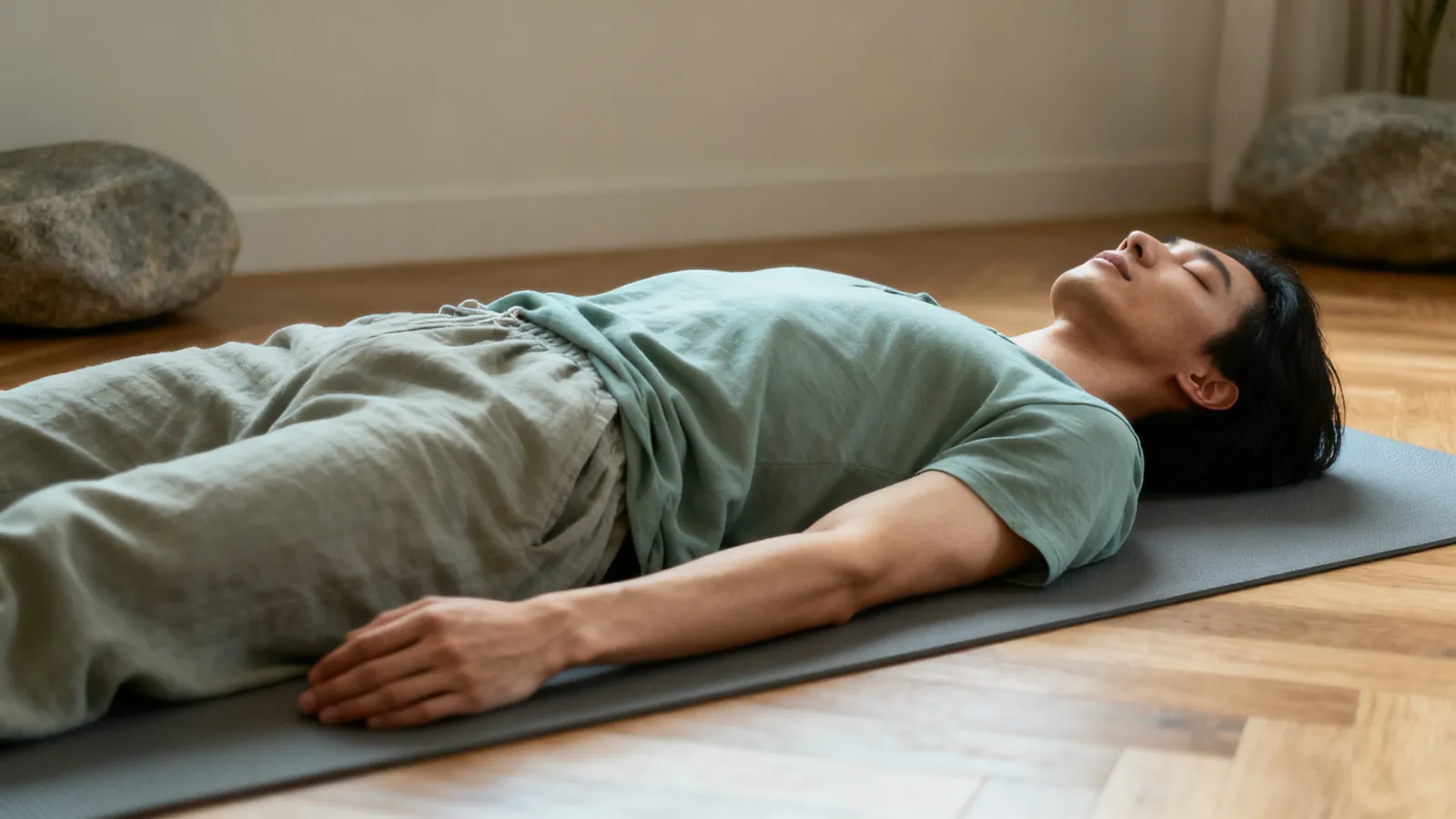
Progressive muscle relaxation is a technique that involves systematically tensing and then releasing different muscle groups in the body. The idea is simple: by deliberately creating tension and then letting it go, you become more aware of where you hold tension and you give those muscles a chance to relax. Many people find it helps them feel calmer and more at ease, and it is often used as part of a bedtime routine or during stressful moments.
This guide walks you through a full progressive muscle relaxation session, step by step, with timings. It also includes a shorter five-minute version for busy days and notes on what to skip if a muscle group is injured or painful.
What is progressive muscle relaxation?
Progressive muscle relaxation, sometimes called PMR or deep muscle relaxation, is a relaxation technique developed by physician Edmund Jacobson in the 1920s. The method is based on the observation that mental tension often goes hand in hand with physical tension. By learning to release physical tension, you can also help your mind settle.
The practice involves working through the body in a set order, usually from feet to face. For each muscle group, you tense the muscles for about five seconds, notice the sensation of tension, and then release for about ten to fifteen seconds, noticing the difference. The contrast between tension and release is what makes the relaxation more noticeable.
PMR is sometimes called a progressive relaxation meditation because it can be done in a quiet, focused way, similar to meditation. It is a skill that improves with practice, and many people find it becomes easier and more effective over time.
The full progressive muscle relaxation script
Find a quiet place where you will not be interrupted. Lie down on a bed or mat, or sit in a comfortable chair with your head supported. Loosen any tight clothing. Close your eyes if that feels comfortable. Take a few natural breaths before you begin.
The sequence below works from feet to face. For each group, tense for about five seconds, then release for ten to fifteen seconds. The entire sequence takes about ten to fifteen minutes.
Feet and calves
Feet: Curl your toes downward, as if trying to grip the floor. Tense for five seconds. Notice the tightness in your feet and arches. Release. Let your feet go completely limp. Wait ten to fifteen seconds, noticing the difference between tension and relaxation.
Calves: Point your toes away from you, flexing your calf muscles. Tense for five seconds. Release. Let your calves sink into the surface beneath you. Wait ten to fifteen seconds.
Thighs and hips
Thighs: Tighten your thigh muscles by pressing your knees down or squeezing your legs together. Tense for five seconds. Release. Feel your thighs become heavy. Wait ten to fifteen seconds.
Hips and buttocks: Squeeze your buttocks together. Tense for five seconds. Release. Notice the release in your hips and lower back. Wait ten to fifteen seconds.
Abdomen and back
Abdomen: Tighten your stomach muscles as if bracing for a gentle poke. Tense for five seconds. Release. Let your belly soften. Wait ten to fifteen seconds.
Lower back: Gently arch your lower back away from the surface. Tense for five seconds. Release. Let your back settle. Wait ten to fifteen seconds.
Hands and arms
Hands: Make a fist with both hands. Tense for five seconds. Notice the tension in your fingers, palms, and wrists. Release. Let your fingers uncurl and rest. Wait ten to fifteen seconds.
Forearms: Bend your hands upward at the wrist, tightening your forearms. Tense for five seconds. Release. Wait ten to fifteen seconds.
Upper arms: Bend your elbows and tighten your biceps. Tense for five seconds. Release. Let your arms drop. Wait ten to fifteen seconds.
Shoulders and neck
Shoulders: Lift your shoulders up toward your ears. Tense for five seconds. Release. Let your shoulders drop away from your ears. Wait ten to fifteen seconds.
Neck: Gently press your head back against the surface or bring your chin toward your chest. Tense for five seconds. Release. Let your neck relax. Wait ten to fifteen seconds.
Face
Jaw: Clench your jaw gently. Tense for five seconds. Release. Let your mouth fall slightly open. Wait ten to fifteen seconds.
Eyes and forehead: Squeeze your eyes shut and raise your eyebrows. Tense for five seconds. Release. Let your forehead smooth out and your eyes rest. Wait ten to fifteen seconds.
Finish
After the final release, take a few moments to notice your whole body. Scan from feet to face and see if any area still feels tense. If so, you can repeat that group. When you are ready, gently move your fingers and toes, and open your eyes.
The five-minute short version
On busy days, you can do a shortened version that covers the main muscle groups in about five minutes. Use the same tense-and-release pattern but combine groups and shorten the release time to about five seconds.
- Feet and calves: Curl your toes and point your feet. Tense for three seconds. Release for five seconds.
- Thighs and hips: Squeeze your thighs and buttocks. Tense for three seconds. Release for five seconds.
- Abdomen and back: Tighten your stomach and gently arch your back. Tense for three seconds. Release for five seconds.
- Hands and arms: Make fists and bend your elbows. Tense for three seconds. Release for five seconds.
- Shoulders and neck: Lift your shoulders and gently press your head back. Tense for three seconds. Release for five seconds.
- Face: Clench your jaw and squeeze your eyes shut. Tense for three seconds. Release for five seconds.
Finish with three slow breaths, noticing the release in your body. This version can be done sitting at a desk, in a parked car, or anywhere you can close your eyes for a few minutes.
When to skip a muscle group
If a muscle group is injured, painful, or has limited range of motion, skip the tension step for that area. Instead, simply bring your attention to that area and allow it to relax as much as it can without tensing. For example, if you have a sore shoulder, do not lift your shoulders; instead, rest your attention on your shoulders and let them soften. If you have a condition that makes muscle tension risky, such as a recent injury or surgery, check with a healthcare professional before doing PMR.
What people get wrong
One common mistake is tensing too hard. The goal is not to create pain or strain; it is to create a clear sensation of tension that you can then release. Tense at about half of your maximum strength. If you find yourself gritting your teeth or holding your breath, you are tensing too much.
Another mistake is rushing. The release phase is where the relaxation happens, so give yourself the full ten to fifteen seconds to notice the difference. Skipping the release or cutting it short makes the practice less effective.
Some people try PMR when they are already very anxious or panicky. If you are in the middle of a panic attack, tensing muscles may increase feelings of tension. In that case, a gentler technique like slow breathing might be more helpful. PMR is generally best practiced when you are already relatively calm, so you can learn the skill and then use it when you need it.
Finally, PMR is not a cure for any condition. It is a relaxation tool that many people find helpful for everyday tension. If you have persistent anxiety, depression, insomnia, or another health concern, talk to a doctor or mental health professional. If you are in urgent distress or having thoughts of self-harm, contact local emergency services right away.
How PMR compares to other relaxation techniques
| Technique | What it involves | Best for | When it may not fit |
|---|---|---|---|
| Progressive muscle relaxation | Tensing and releasing muscle groups | Learning to notice and release physical tension; bedtime routine | Acute panic; recent injury or surgery in a muscle group |
| Slow breathing | Slowing the breath, often with a longer exhale | Quick calming in the moment; before sleep | People who find breath focus increases anxiety |
| Body scan | Moving attention through the body without tensing | Building body awareness; gentle relaxation | People who prefer more active techniques |
| Guided imagery | Visualizing a calm scene | Relaxation when muscle tension is not the main issue | People who find visualization difficult |
When to see a doctor
Progressive muscle relaxation is a self-help tool, not a medical treatment. If you have ongoing anxiety, depression, sleep problems, or chronic stress, speak with a doctor or mental health professional. They can help you understand what is going on and discuss options. If you have a heart or lung condition, are pregnant, or have any concern about tensing muscles, check with your clinician before starting. If you are in crisis or having thoughts of harming yourself, contact local emergency services immediately.
FAQ
How long does progressive muscle relaxation take? The full sequence takes about ten to fifteen minutes. The short version can be done in about five minutes. You can also do just a few muscle groups if you have less time.
Can I do progressive muscle relaxation lying down? Yes, lying down is common and can make it easier to relax. If you tend to fall asleep, try sitting in a comfortable chair instead. Either way, support your head and neck.
What if I can’t feel the tension release? Some people need practice to notice the contrast. Try tensing a little more firmly, but not to the point of pain. With repetition, the difference often becomes clearer.
Is progressive muscle relaxation safe for everyone? It is generally considered safe, but skip any muscle group that is injured or painful. If you have a medical condition or are unsure, check with a healthcare professional first.
Can progressive muscle relaxation help with sleep? Many people use it as part of a bedtime routine to help their body settle. It is not a treatment for insomnia, but it can be a helpful habit. If sleep problems persist, talk to a doctor.
Common questions
How long does progressive muscle relaxation take?
The full sequence takes about ten to fifteen minutes. The short version can be done in about five minutes. You can also do just a few muscle groups if you have less time.
Can I do progressive muscle relaxation lying down?
Yes, lying down is common and can make it easier to relax. If you tend to fall asleep, try sitting in a comfortable chair instead. Either way, support your head and neck.
What if I can't feel the tension release?
Some people need practice to notice the contrast. Try tensing a little more firmly, but not to the point of pain. With repetition, the difference often becomes clearer.
Is progressive muscle relaxation safe for everyone?
It is generally considered safe, but skip any muscle group that is injured or painful. If you have a medical condition or are unsure, check with a healthcare professional first.
Can progressive muscle relaxation help with sleep?
Many people use it as part of a bedtime routine to help their body settle. It is not a treatment for insomnia, but it can be a helpful habit. If sleep problems persist, talk to a doctor.
Read next

How to Calm Your Nervous System: A Practical Guide
Learn how to calm your nervous system with simple techniques like long exhales, cold water, and slow walking. A step-by-step guide for everyday stress.
Guided Imagery for Relaxation: A Calm Place Script
Learn guided imagery meditation with a step-by-step calm place script, a shorter version for busy days, and tips for building your own relaxing scene.

How to Relax When You Can't Switch Off
Learn how to relax when your body is tired but your mind stays wired. A ten-minute practice with breath, movement, warmth, and a shorter version for busy days.