Diaphragmatic Breathing: A Step-by-Step Guide
Learn diaphragmatic breathing with step-by-step instructions. Discover how to tell chest from belly breathing, a lying-down practice, and a seated version.
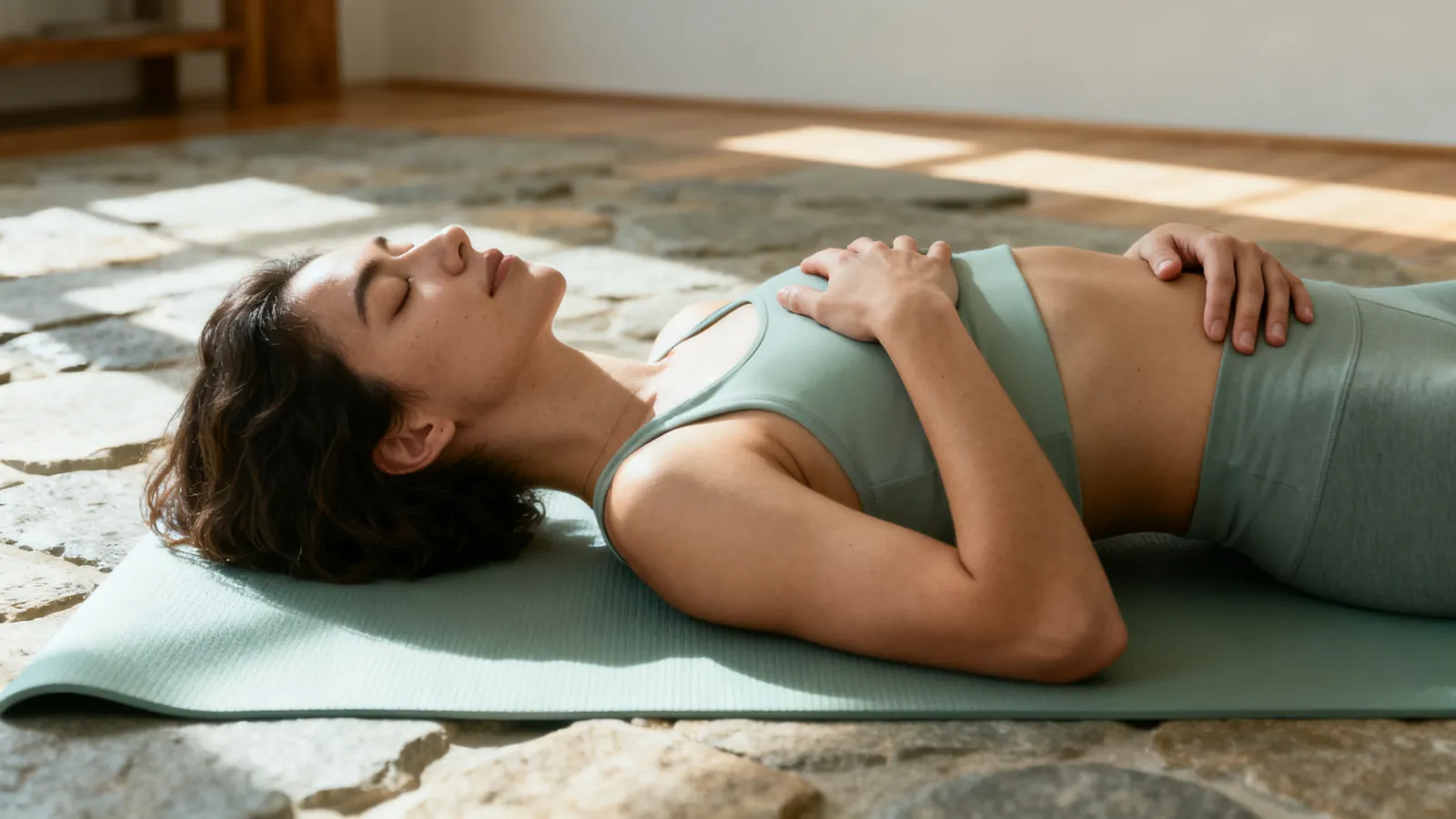
Diaphragmatic breathing, also called belly breathing or abdominal breathing, is a way of breathing that uses the diaphragm muscle to its full capacity. The diaphragm is a dome-shaped muscle at the base of the lungs. When it contracts, it moves downward, creating more space in the chest cavity and allowing the lungs to expand. This type of breathing is often contrasted with chest breathing, where the upper chest and shoulders move more than the belly. Many people find that diaphragmatic breathing helps them feel calmer and more centered. It is a foundational practice in relaxation and stress management.
What the Diaphragm Does
The diaphragm is the primary muscle of respiration. During inhalation, it contracts and flattens, pushing the abdominal contents downward and outward. This creates a vacuum that draws air into the lungs. During exhalation, it relaxes and returns to its dome shape, pushing air out. When the diaphragm is used efficiently, breathing requires less effort and can be more relaxing. In contrast, chest breathing relies on the intercostal muscles and accessory muscles in the neck and shoulders. This pattern is common during stress and can lead to shallow, rapid breathing.
How to Tell Chest Breathing from Belly Breathing
A simple way to distinguish between the two patterns is to place one hand on your chest and the other on your belly. Take a few natural breaths and observe which hand moves more. If the hand on your chest rises noticeably while the hand on your belly stays relatively still, you are likely chest breathing. If the hand on your belly rises and falls while the chest hand moves little, you are using your diaphragm. This self-check can be done anytime, sitting or lying down.
Step-by-Step: Lying-Down Practice
This is the easiest position to learn diaphragmatic breathing because gravity helps the belly move.
- Lie on your back on a firm surface, such as a bed or a mat. Bend your knees slightly and place your feet flat, or place a pillow under your knees for comfort.
- Place one hand on your upper chest and the other on your belly, just below the ribcage.
- Close your eyes if that feels comfortable.
- Inhale slowly through your nose for a count of 4. As you inhale, feel your belly rise under your hand. The hand on your chest should remain relatively still.
- Exhale slowly through your mouth for a count of 6. Feel your belly fall. You can purse your lips as if blowing out a candle.
- Repeat this cycle for 5 to 10 breaths. If you feel lightheaded, pause and breathe normally.
Start with 5 breaths and gradually increase to 10 over a few days. The goal is smooth, gentle breathing, not forcing the belly out.
Step-by-Step: Seated Practice
Once you are comfortable lying down, try the same pattern while sitting. This makes it easier to integrate into daily life.
- Sit upright in a chair with your back supported and feet flat on the floor. Relax your shoulders.
- Place one hand on your chest and the other on your belly.
- Inhale through your nose for a count of 4, feeling your belly expand.
- Exhale through your mouth for a count of 6, feeling your belly contract.
- Continue for 5 to 10 breaths.
You can also practice without hands once you get the hang of it. Some people find it helpful to place a light book on the belly while lying down; the book should rise and fall with each breath.
Why It Feels Awkward at First
For many people, diaphragmatic breathing feels unnatural initially. This is because chest breathing has become a habit, often reinforced by stress, tight clothing, or prolonged sitting. The diaphragm may be tight or underused. As you practice, the sensation of the belly moving can feel exaggerated or odd. This is normal. With repetition, the pattern becomes more familiar and eventually more automatic. It may take a few days of consistent practice to feel comfortable. Patience and gentle persistence help.
Comparison Table: Diaphragmatic Breathing vs. Other Techniques
| Technique | Best For | How to Do It | When It Does NOT Fit |
|---|---|---|---|
| Diaphragmatic breathing | Learning to breathe deeply and calmly; general relaxation | Inhale 4 counts, exhale 6 counts, belly rises | If you have a condition where deep breathing is restricted; check with clinician |
| 4-7-8 breathing | Falling asleep; quick calming | Inhale 4, hold 7, exhale 8 | Not for those who are pregnant or have heart/lung conditions without medical advice; may cause dizziness |
| Box breathing | Focus and stress relief | Inhale 4, hold 4, exhale 4, hold 4 | Can be difficult for beginners; not ideal if you have anxiety about breath holds |
What People Get Wrong
One common mistake is forcing the belly out too hard. The breath should be gentle and natural. Another is breathing too quickly. The exhale should be slow and complete. Some people try to hold their breath or count too fast, which can cause lightheadedness. Also, practicing only when stressed may make it harder to learn; regular short practice sessions are more effective. Finally, slouching or wearing tight clothing can restrict the diaphragm, so posture matters.
When It Does Not Help
Diaphragmatic breathing is not a cure for medical conditions. If you have a respiratory condition, heart condition, or are pregnant, consult a healthcare professional before doing long breath holds. If you experience dizziness, stop and breathe normally. If you have persistent anxiety, panic, or sleep problems, speak with a doctor or mental health professional. If you have thoughts of self-harm, contact local emergency services immediately.
How Long and How Often
Aim for 5 to 10 minutes of practice once or twice a day. Even 5 breaths can be beneficial. Consistency matters more than duration. You can practice while lying in bed before sleep, sitting at your desk, or during a break. Over time, you may notice that you naturally breathe more from your belly during the day.
What It Feels Like the First Time
At first, you might feel a slight stretch in the belly or a sense of effort. Some people feel relaxed; others feel nothing special. It is common to feel a bit awkward or to have thoughts like “Am I doing this right?” That is normal. With practice, the movement becomes smoother and more comfortable. Many people report feeling calmer after a few minutes.
Safety and Dizziness Rule
If you feel dizzy or lightheaded during diaphragmatic breathing, stop and breathe normally. Do not force the breath. People who are pregnant or have a heart or lung condition should check with their clinician before doing long breath holds. This practice is generally safe for most people, but it is not a substitute for medical advice.
Making It a Habit
Link the practice to an existing routine, such as after waking up or before going to sleep. Use reminders if helpful. Start with just 5 breaths and build up. The goal is to make diaphragmatic breathing a natural part of your day, not another task to check off. Over time, it can become a reliable tool for feeling more grounded.
Common questions
What is diaphragmatic breathing?
Diaphragmatic breathing is a technique that engages the diaphragm, the main muscle for breathing. It involves expanding the belly on inhalation rather than the chest. This pattern is often used for relaxation and stress reduction.
How do I know if I'm doing it right?
Place one hand on your chest and one on your belly. When you inhale, the hand on your belly should rise while the chest hand stays relatively still. If the chest hand moves more, you may be chest breathing.
Why does belly breathing feel weird at first?
Many people are used to chest breathing, so using the diaphragm feels unfamiliar. The belly movement may seem exaggerated. With regular practice, it becomes more natural.
Can diaphragmatic breathing help with anxiety?
Many people find that diaphragmatic breathing helps them feel calmer. It is not a treatment for anxiety disorders. If anxiety interferes with daily life, consult a mental health professional.
Is it safe to practice diaphragmatic breathing every day?
Yes, for most people it is safe. Stop if you feel dizzy. If you are pregnant or have a heart or lung condition, check with your clinician before doing long breath holds.
Read next

4-7-8 Breathing: How to Do the Technique
Learn the 4-7-8 breathing pattern step by step: exact counts, a beginner version, how long to practise, what to expect and when to stop.

Box Breathing: How to Do the Four-Equal-Sides Method
Learn box breathing: inhale, hold, exhale, hold, each for four counts. Step-by-step guide, beginner adjustments, and when to use it.

Breathing Exercises for Stress: A Practical Guide
Learn five breathing exercises for stress: slow exhale, box breathing, 4-7-8, belly breathing, and the physiological sigh, with counts, timings, and safety notes.