Breathing Exercises for Anxious Moments
A 60-second slow-exhale routine for anxious moments, with counts, a beginner version, grounding with the breath, and what to do if breath focus makes it worse.
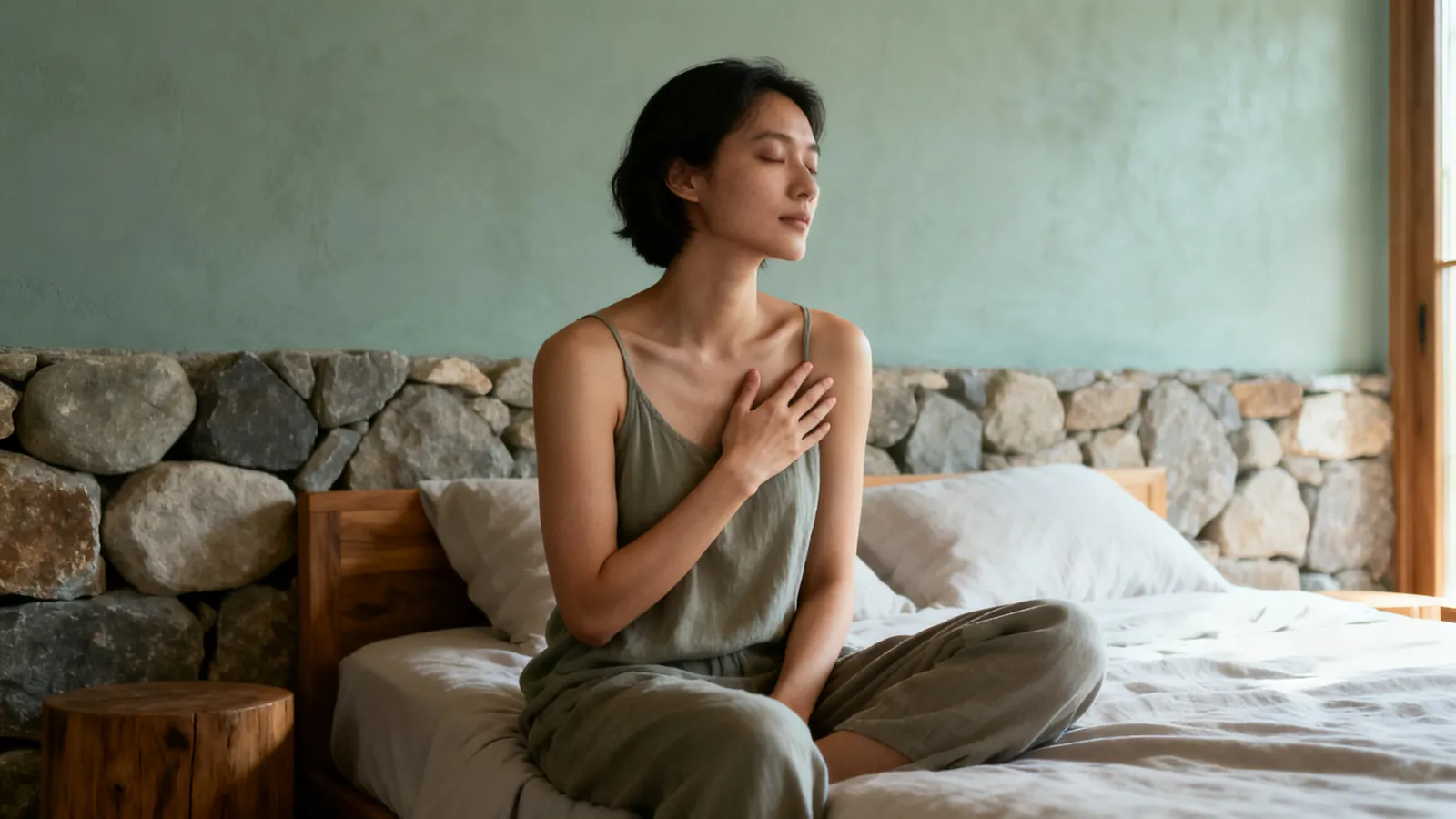
Anxiety changes breathing before most people notice it. Breaths get shorter and faster, and they move higher into the chest. That pattern is useful during real danger. It becomes a problem when it keeps running with no danger present, because fast, shallow breathing can feed the physical side of anxiety: a racing heart, tight chest, tingling hands, a sense of not getting enough air. Slow breathing for anxiety works in the other direction. Lengthening the exhale and lowering the breath into the belly tends to switch on the part of the nervous system that settles heart rate and muscle tension. It is not a cure and it does not replace care from a doctor or therapist, but it is a portable tool that many people find takes the edge off a spike within a minute or two.
What happens to the breath during anxiety
When the body reads a situation as threatening, breathing speeds up to move more oxygen. Carbon dioxide levels shift, and that shift itself produces symptoms: dizziness, cold or tingling hands, a feeling of suffocation. The mind reads those symptoms as more evidence of danger, and the breath speeds up again. This loop is why anxiety can escalate so quickly from a small trigger.
A slow exhale interrupts the loop. Exhaling is linked to the parasympathetic branch of the nervous system, the one that handles rest and recovery. Making the exhale longer than the inhale, even slightly, tends to slow the heart and relax the muscles around the ribs and shoulders. The effect is physical, not psychological, which is why it can work even when the mind is still racing.
The 60-second slow-exhale routine
This is the core practice. It takes about a minute and can be done sitting, standing or lying down. Eyes open or closed.
- Notice the breath as it is. One normal breath in and out, no change. This gives a starting point.
- Breathe in through the nose for a count of four. Slow and quiet. The belly should move out, not the shoulders up.
- Breathe out through the nose or slightly parted lips for a count of six. Let the exhale be smooth and unforced, like fogging a window.
- Repeat for ten breaths. That is roughly one minute. The count can be adjusted: four in, five out is fine if six feels like a strain.
- Finish with one normal breath. Do not hold or check the result. Just return to ordinary breathing.
If the mind wanders, that is expected. Bring attention back to the count without judging the wandering. The counting is doing two jobs: it paces the breath and it gives the mind something neutral to hold.
Beginner version
Counts can make some people tense. A simpler version: inhale through the nose for a count of three, exhale for a count of four, and repeat five times. The only rule that matters is that the exhale is longer than the inhale. Even two seconds in and three seconds out counts as slow breathing.
How long and how often
One round of ten breaths is enough for a spike. For everyday use, two or three rounds a day, at a fixed time such as after waking or before bed, tends to make the pattern easier to reach when anxiety rises. Practising when calm is what makes it available when calm is gone.
What it feels like the first time
Most people notice the shoulders drop and the jaw loosen before they notice anything else. The heart rate may slow within a few breaths. Some people feel a brief wave of sleepiness or a warm heaviness in the arms. Others feel almost nothing the first time and notice more on the second or third attempt. Both are normal.
The dizziness rule
If the exercise brings on dizziness, lightheadedness or tingling, stop and breathe normally. Slow breathing changes carbon dioxide levels, and some people are more sensitive to that than others. Shorter counts usually solve it. Anyone who is pregnant or has a heart or lung condition should check long breath holds with a clinician before using them.
Grounding with the breath
When anxiety is high, attention tends to be pulled into thoughts. Grounding uses the breath as an anchor to the present room. One way: breathe normally and, on each exhale, silently name one thing that can be felt physically. The weight of the feet on the floor. The temperature of the air on the face. The texture of the chair. Ten exhales, ten sensations. This is not a distraction technique; it is a way of giving the nervous system evidence that the body is here, now, and not in the situation the mind is replaying.
A second version uses the senses in sequence: one thing seen, one thing heard, one thing felt, repeated for three rounds. The breath stays slow and unforced throughout.
If focusing on the breath makes it worse
For some people, especially those who have had panic attacks, watching the breath closely can increase anxiety. The attention itself becomes a trigger. This is common and it does not mean the person is doing it wrong.
Options that work around it:
- Count the exhale only. Let the inhale happen on its own and count only the out-breath.
- Add movement. Walk slowly and match the breath to steps: two steps in, three steps out.
- Use sound. Hum on the exhale. The vibration lengthens the exhale without requiring close attention to the breath.
- Use cold or texture. Hold something cool or textured and breathe normally while noticing it.
- Try a body scan instead. Attention moves through the body from feet to head, and the breath is left alone.
If breath focus reliably makes things worse, that is worth mentioning to a doctor or therapist. It is a known pattern and there are other approaches.
When breathing exercises are not the right tool
Slow breathing is a support, not a treatment. It does not cure or reverse anxiety, panic, insomnia or any other condition. It tends to help most with the physical surge of a spike, and it tends to help least when the anxiety is constant, has been building for weeks, or is tied to a situation that needs practical action.
It is also not the right first move in some moments. If the anxiety is attached to a real problem such as a deadline, a conflict or a decision, the breath can lower the physical heat but the problem remains. If the spike is part of a pattern that shows up most days, breathing alone will not address it.
Frequent or severe anxiety, panic attacks, or anxiety that interferes with sleep, work or relationships is something to discuss with a doctor or a mental health professional. If there is urgent distress or any thought of self-harm, contact local emergency services right away.
Comparing options
| Practice | Best for | Time | When it does not fit |
|---|---|---|---|
| Slow exhale, 4 in / 6 out | A spike in the moment; public settings | 1 minute | Dizziness with slow breathing; breath focus increases anxiety |
| Beginner version, 3 in / 4 out | First attempts; high tension | 30 seconds | Needs a longer settle; better as a starting point |
| Grounding with the breath | Racing thoughts; feeling unreal | 2 minutes | Acute panic where attention on the body is uncomfortable |
| Walking breath, 2 steps in / 3 out | Restlessness; can’t sit still | 5 minutes | Situations where walking is not possible |
| Humming exhale | Chest tightness; jaw tension | 1 minute | Dislike of sound; throat or voice strain |
What people get wrong
Forcing the exhale. Pushing air out hard creates tension and can cause dizziness. The exhale should be soft and unforced, like a sigh.
Chasing a big breath. Deep breathing for anxiety does not mean maximum lung capacity. It means slow and low. Big gulps of air shift carbon dioxide and often make symptoms worse.
Only practising during a spike. The pattern is easiest to reach when it has been rehearsed while calm. A daily round at a fixed time does more than occasional emergency use.
Expecting the mind to go quiet. Slow breathing changes the body first. Thoughts often continue, and that is not failure. The aim is a slower body, not an empty mind.
Using it as the only response. If anxiety is frequent or severe, breathing exercises sit alongside professional care, not in place of it.
Stopping at the first sign of discomfort. Mild restlessness in the first few breaths is common. Dizziness, tingling or a rising sense of panic is not; stop, breathe normally, and try a shorter count or a different approach.
Common questions
How do I do deep breathing for anxiety in the moment?
Breathe in through the nose for a count of four, then out for a count of six, and repeat for ten breaths. The exhale being longer than the inhale is what tends to settle the body. If six feels like a strain, use five, or start with three in and four out.
Why does slow breathing help when I feel anxious?
Fast, shallow breathing can feed the physical symptoms of anxiety, such as a racing heart and tight chest. A longer exhale is linked to the part of the nervous system that slows heart rate and relaxes muscles. Many people find the physical edge of a spike eases within a minute or two.
What if focusing on my breath makes me more anxious?
That is a known pattern, especially after panic attacks, and it does not mean the technique is wrong. Try counting only the exhale, humming on the out-breath, matching the breath to steps while walking, or using a body scan instead. If it reliably makes things worse, mention it to a doctor or therapist.
How often should I practise breathing exercises for anxiety?
One round of ten breaths is enough for a spike. For everyday use, two or three short rounds a day at fixed times, such as after waking or before bed, tends to make the pattern easier to reach when anxiety rises. Practising while calm is what makes it available when calm is gone.
When should I see a doctor about anxiety?
Frequent or severe anxiety, panic attacks, or anxiety that interferes with sleep, work or relationships is worth discussing with a doctor or mental health professional. If there is urgent distress or any thought of self-harm, contact local emergency services right away.
Read next
4-7-8 Breathing: How to Do the Technique
Learn the 4-7-8 breathing pattern step by step: exact counts, a beginner version, how long to practise, what to expect and when to stop.
Box Breathing: How to Do the Four-Equal-Sides Method
Learn box breathing: inhale, hold, exhale, hold, each for four counts. Step-by-step guide, beginner adjustments, and when to use it.
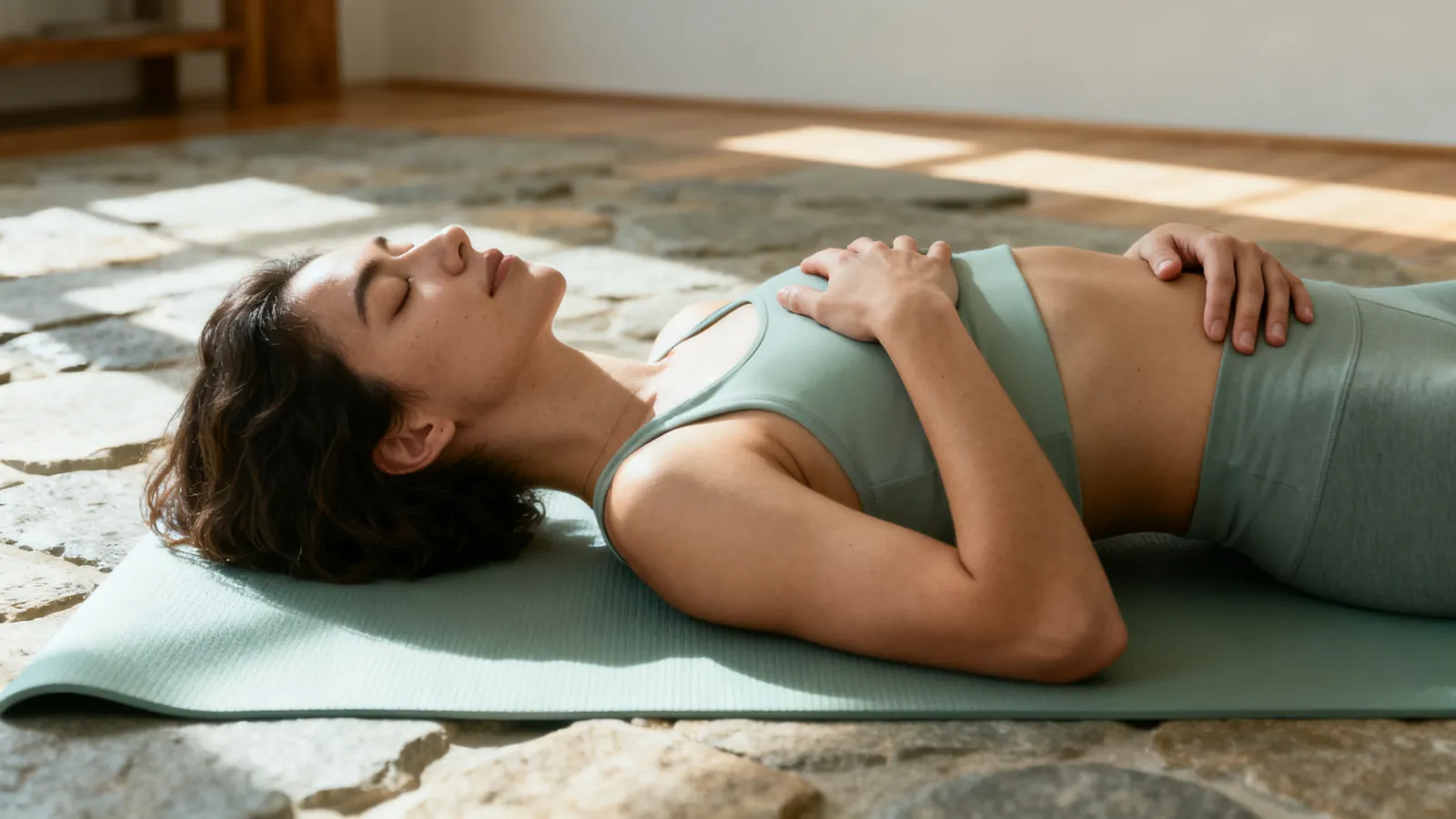
Diaphragmatic Breathing: A Step-by-Step Guide
Learn diaphragmatic breathing with step-by-step instructions. Discover how to tell chest from belly breathing, a lying-down practice, and a seated version.