What Stress Is and What It Does to the Body
Stress is the body's response to a demand. Learn how acute and chronic stress differ, what eustress means, and simple steps to settle the response.

Stress is the body’s response to a demand. The demand itself is called a stressor; the response is what happens inside you when the brain decides that demand needs attention. That response is not a flaw. It is a set of automatic changes that sharpen focus, raise heart rate and release energy so a person can meet a challenge. The trouble starts when the response stays switched on, or when it fires at times when nothing can be done about the demand.
Understanding the difference between the stressor and the stress response is useful because it changes what you can adjust. You cannot always remove the demand. You can often change how much recovery you get between demands, and you can learn practices that help the body return to a settled state.
Stressors and the stress response
A stressor is anything the brain reads as a demand: a deadline, a difficult conversation, a loud noise, a health worry, a move, a first day somewhere new. Stressors can be external (traffic, bills, a crowded train) or internal (a memory, a worry about the future, a harsh thought about yourself).
The stress response is the body’s answer. In the moment, the nervous system releases hormones such as adrenaline and cortisol. Heart rate and breathing speed up. Muscles tense. Digestion slows. Blood sugar rises to supply fuel. Attention narrows onto the demand. This is often called the fight-or-flight response, and it is designed to be short: a burst of energy, then a return to baseline.
That return matters. When a stressor passes, the body usually settles within minutes to hours. Breathing slows, muscles loosen, digestion resumes. The problem is not the spike. The problem is a spike that never quite comes down.
Acute stress, chronic stress, and the difference it makes
Acute stress is the short burst. It happens before a presentation, during an argument, or when a car pulls out in front of you. It feels uncomfortable, but it ends, and the body recovers. Many people find that mild acute stress actually helps them focus and perform.
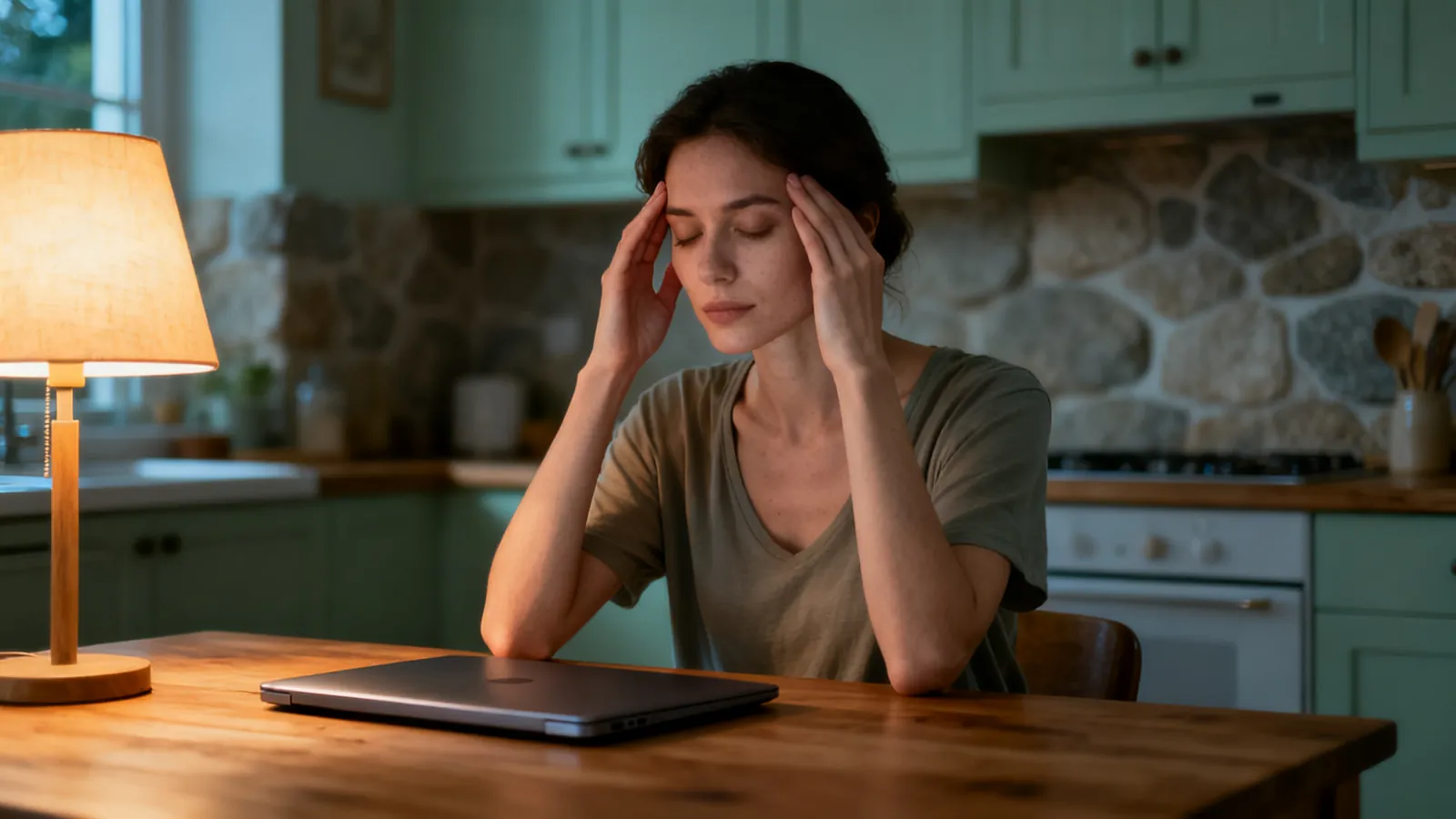
Chronic stress is different. It happens when stressors are frequent, ongoing or unpredictable, and the body does not get a full return to baseline. The stress response stays partly switched on for weeks or months. Over time, people commonly notice:
- Sleep that is lighter, broken, or hard to start
- Muscle tension in the neck, shoulders, or jaw
- Headaches, stomach upset, or changes in appetite
- Feeling irritable, tearful, or flat
- Difficulty concentrating or remembering small things
- A sense of being wired but tired
These signs are common and not a diagnosis. They can also come from medical conditions, so persistent or worsening symptoms are worth discussing with a doctor.
Eustress and distress
The same stress response can feel very different depending on the situation. Eustress is the term for stress that feels manageable, meaningful, or even energising: a challenging project, a race, a first date, learning a new skill. Distress is stress that feels overwhelming, threatening, or out of control.
The event itself does not decide which one you get. Two people can face the same exam, the same move, or the same diagnosis and have completely different responses. What tends to shape the difference:
- Control. A sense of having some choice or influence over the demand.
- Predictability. Knowing roughly what is coming and when.
- Meaning. Reading the demand as connected to something that matters.
- Support. Having people to talk to or practical help.
- Recovery. Getting enough sleep, rest, and time between demands.
- History. Past experiences shape how threatening a demand feels now.
This is why two people can live through the same event and only one of them feels chronically stressed. It is not weakness or strength. It is a mix of circumstances, biology, and history.
A step-by-step practice to settle the stress response
The practices below do not remove stressors. They help the body return toward baseline after a demand, and they can be used before a known stressor to steady the system. They are safe for most people. If a breathing exercise brings on dizziness or lightheadedness, stop and breathe normally. People who are pregnant or have a heart or lung condition should check long breath holds with their clinician.
1. Notice and name the stressor
Pause and finish this sentence in your head: “The demand right now is ____.” Be specific. “The email from my manager” is more useful than “everything.” Naming the stressor separates it from the response and makes it easier to see what, if anything, can be done.
2. Lengthen the exhale
Sit or stand comfortably. Breathe in through the nose for a count of four. Breathe out through the nose or mouth for a count of six. Repeat for ten breaths. The longer exhale is the active part; it tends to nudge the nervous system toward a calmer state. If six feels too long, use four in and five out.
3. Release the muscles that hold tension
Stress often shows up in the jaw, shoulders, and hands. On each exhale, let the jaw soften, let the shoulders drop away from the ears, and uncurl the fingers. Do this for five exhales. This is not relaxation for its own sake; it gives the brain feedback that the demand is not immediate.
4. Move for two minutes
Stand up and walk, stretch the arms overhead, or roll the shoulders. Movement uses some of the energy the stress response has released and can help the body complete the cycle rather than staying braced.
5. Choose one next action
Ask: what is one thing that can be done in the next ten minutes? It might be replying to one message, writing down a worry, asking for help, or deciding to leave it until tomorrow. One action is enough. The point is to shift from a feeling of being flooded to a feeling of having a next step.
6. Protect recovery later
Stress that is not followed by recovery becomes chronic. Later in the day, aim for a wind-down: dimmer light, a consistent bedtime, and a few minutes of slower breathing before sleep. Recovery is not a reward for finishing everything. It is part of how the stress response switches off.
Which approach fits which situation
| Situation | What tends to fit | What to watch for |
|---|---|---|
| Acute stress before a known event (meeting, exam, appointment) | Four-in, six-out breathing for ten breaths, then one small action | Does not replace preparation; if breathing causes dizziness, return to normal breathing |
| Stress that lingers after the event | Two minutes of movement, then a wind-down routine in the evening | If sleep stays broken for weeks, talk to a doctor |
| Ongoing, unpredictable stress (caregiving, job insecurity, money worry) | Daily recovery blocks, practical support, and one problem-solving step at a time | This is where chronic stress builds; professional support can help |
| Stress with panic-like surges | Slow breathing with a longer exhale, feet on the floor, naming what is around you | If panic is frequent or frightening, see a doctor or mental health professional |
| Stress that feels energising and manageable | Use it; keep recovery in place | Eustress still uses energy; without rest it can slide into distress |
What people get wrong
Trying to remove all stress. Some stress is part of a normal, engaged life. The goal is not zero stress; it is a stress response that comes down again.
Confusing the stressor with the response. If the demand cannot be removed, the response can still be worked with. Breathing, movement, and recovery time act on the response.
Waiting for the big fix. Small, repeated actions tend to matter more than one dramatic change. Ten breaths before a difficult call, done consistently, adds up.
Using stimulants to push through. Caffeine, nicotine, and late-night screens can keep the system switched on and make sleep harder, which makes the next day’s stress response more reactive.
Judging the response. A racing heart before a challenge is not a sign of failure. It is the body preparing. The judgment adds a second stressor on top of the first.
When this does not help, and when to see a professional
These practices are self-care tools, not treatment. They can help you feel calmer and recover between demands, but they are not a substitute for medical or mental health care.
See a doctor or a mental health professional if:
- Stress is affecting sleep, appetite, or work for more than a few weeks
- You feel unable to cope, or you are avoiding things you used to do
- You have physical symptoms that are new, severe, or getting worse
- You are using alcohol, drugs, or other substances to manage how you feel
- You have symptoms of anxiety or depression that persist
If you are in urgent distress or having thoughts of harming yourself, contact your local emergency services right away. Do not wait.
Stress is a normal response to demand. It becomes a problem when it does not switch off. Naming the stressor, lengthening the exhale, moving, choosing one next action, and protecting recovery are small, repeatable ways to help the body return to baseline. They work best alongside sleep, support, and, when needed, professional care.
Common questions
What is the difference between a stressor and stress?
A stressor is the demand itself, such as a deadline, an argument, or a worry. Stress is the body's response to that demand, including faster heart rate, tense muscles, and narrowed attention. Separating the two helps you see what can be changed and what can be worked with.
What are eustress and distress?
Eustress is stress that feels manageable, meaningful, or energising, like a challenging project or a race. Distress is stress that feels overwhelming, threatening, or out of control. The same event can produce either one depending on factors like control, predictability, support, and recovery time.
Can stress make you physically ill?
Ongoing stress is linked to physical symptoms such as headaches, stomach upset, muscle tension, and sleep problems. It can also worsen existing conditions. These symptoms are common and not a diagnosis, so persistent or worsening symptoms are worth discussing with a doctor.
How do I calm down quickly when stress hits?
Try breathing in for a count of four and out for a count of six, for ten breaths. Let the jaw and shoulders soften on each exhale. Then choose one small action for the next ten minutes. If the breathing makes you dizzy, stop and breathe normally.
When should I see a professional about stress?
See a doctor or mental health professional if stress is affecting sleep, appetite, or daily life for more than a few weeks, if you feel unable to cope, or if you are using substances to manage it. Urgent distress or thoughts of self-harm mean contacting local emergency services right away.
Read next

Burnout: Signs, Symptoms and What Helps
Learn to recognise burnout symptoms like exhaustion and cynicism, how it differs from tiredness, and practical steps for recovery and when to seek help.
Effects of Stress on the Body: What Happens and What Helps
Learn how stress hormones like adrenaline and cortisol affect your body in the short and long term, plus practical steps to feel calmer and when to seek help.
Feeling Overwhelmed: What to Do in the Moment
Feeling overwhelmed is a stress response, not a personal failing. Learn a five-step way to steady yourself, plus when to talk to a doctor or therapist.